
Slash Your Bills & Boost Your Home's Value: The Ultimate Guide to Energy Efficiency:

According to Rightmove, being mindful of energy consumption and aiming for a smaller carbon footprint are common goals among many UK homeowners. The Energy Performance Certificate (EPC) of a property, which rates homes from A (most efficient) to G (least efficient), can significantly influence energy bills.
Rightmove's analysis indicates that homes with better EPC ratings tend to have lower average energy bills. The EPC provides an estimated annual cost for heating, lighting, and hot water, based on the property's state during assessment. This means changes made after the certificate's issuance, like upgrading to double glazing, won't be reflected until a new EPC is issued.
Lifestyle, household size, and the initial energy efficiency of a property play roles in energy consumption. However, homes with higher EPC ratings generally consume less energy for heating and lighting, resulting in lower energy bills and carbon emissions. This is particularly notable as many UK homes, built with older materials and technology, average a D rating.

These calculations are an average only and are based on information from over 300,000 EPCs that were created during the last 3 months of 2023, across each property size and EPC bands B-G. A-rated properties have been excluded from the calculations due to low volumes.
Rightmove points out that enhancing a home's energy efficiency can lead to significant savings on bills and contribute to reducing carbon dioxide emissions. With around a quarter of UK greenhouse gas emissions stemming from residential properties, according to Office for National Statistics (ONS) data, the push for greener homes is more crucial than ever.
To lower energy bills, Rightmove suggests several low or no-cost measures, such as adjusting combi-boiler temperatures, closing curtains, and installing smart meters. More substantial upgrades, like smart thermostats or improved insulation, can further reduce energy consumption.

Based on average rates for direct debit users, which vary by region.
Given the recent spike in energy costs, the UK government has provided financial assistance to households, though the same level of support is no longer available. However, certain groups may still qualify for help with energy bills.
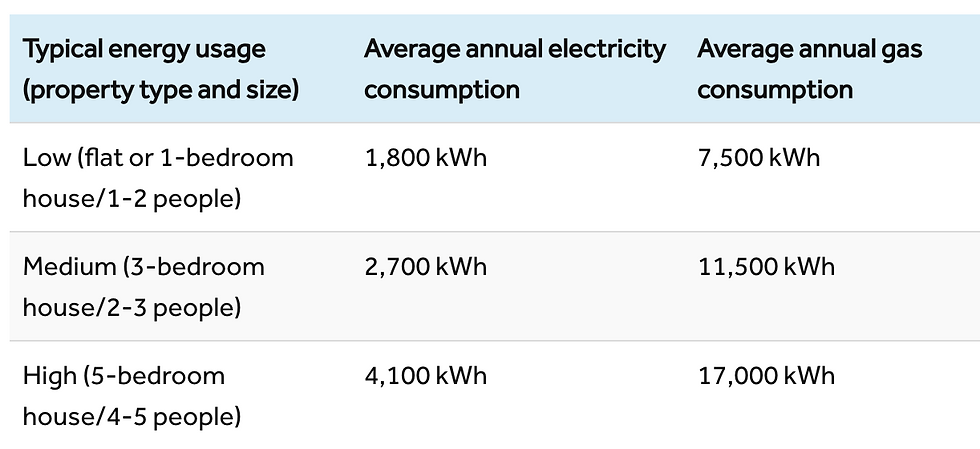
For those considering major upgrades to enhance their home's energy efficiency, investments in solar panels, triple glazing, insulation, or heat pumps are recommended. While upfront costs can be significant, the long-term benefits—such as a lower carbon footprint, reduced energy usage, and potentially increased property value—can outweigh initial expenditures. Rightmove's research suggests that improving a home's EPC rating from F to C could boost its value significantly.
In terms of future energy bill projections, a 12% decrease in the energy price cap to £1,690 was announced by Ofgem for April 2024. Prices are expected to continue falling throughout the year, although they may rise again in the winter. These predictions, however, are subject to change based on global events affecting the wholesale gas market.
Rightmove also addresses FAQs regarding energy usage and costs, emphasising the role of the energy price cap in mitigating the impact of fluctuating wholesale gas prices on consumers. The cap, set by Ofgem, aims to protect consumers by limiting how much energy companies can charge per unit of energy.
Understanding typical household energy consumption, informed by Ofgem's estimates, can help homeowners make more informed decisions about their energy use and potential savings strategies.
Written by Veera Josey, 27th February 2024
Sources: Ofgem, Rightmove.


Comments